What the application does fix
Outdoor ozone and UV exposure usually keep EPDM in play. Oil or fuel exposure often moves the conversation toward NBR or FKM. The buyer still writes the medium.
FACTORY COMPARISON / FIRST ORDER
Compare quotes from up to 3 factories
FREE basic specification and sourcing-requirements review
Eligible first orders may receive up to 3%
Eligibility applies to qualified business buyers and is confirmed after we review your product, quantity, destination, and sourcing requirements. Final savings depend on supplier confirmation, product type and order value.
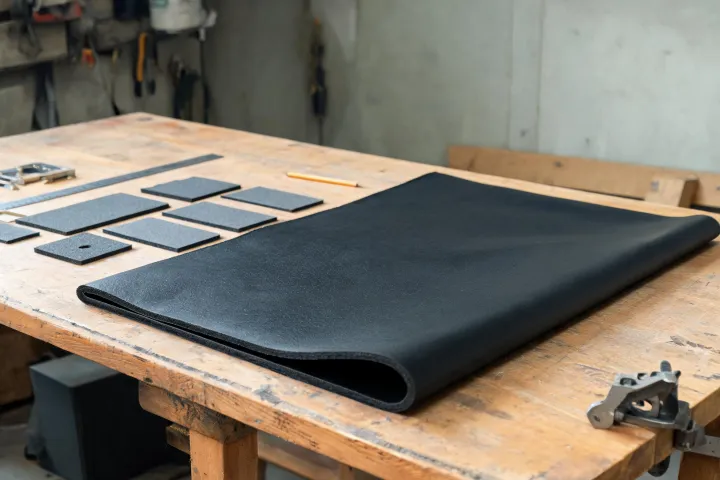
what is epdm rubber, in purchasing terms, is a terpolymer of ethylene, propylene and a diene used for weatherable sheet, seals and outdoor gaskets. The application fixes medium and site temperature. It does not fix hardness, density or a promised service life.
Industry tables often list EPDM continuous service around -40 to +125°C. That range is published elastomer practice, not a rating this desk reprints for any option on this site. The °F or °C figure that belongs on the request comes from the installed site, not from a catalogue default.
Outdoor ozone and UV exposure usually keep EPDM in play. Oil or fuel exposure often moves the conversation toward NBR or FKM. The buyer still writes the medium.
Shore A versus Shore D, density in g/cc, thickness, color and the ASTM method remain open after the application is described. Those are purchase fields, not implied results.
No leak-free roof, no guaranteed compression set, no field-installation outcome. Those belong to the named supplier and the installer, not to this desk.
Vulcanized EPDM versus thermoplastic elastomer (TPE / TPU) is a real trade-off. TPEs run on standard injection molding at shorter cycles and can be reground; crosslinked EPDM still holds compression set and outdoor stability that many TPEs do not match above about 120°C continuous service. This table is a selection aid, not a factory quote.
| Axis | Vulcanized EPDM | TPE / TPU substitute |
|---|---|---|
| Process | Compression / transfer / extrusion plus cure | Injection, often 15–40 s cycles |
| Heat window | Published EPDM practice often cites -40 to +125°C | Many grades weaken above ~120°C continuous |
| Oil swell | Poor versus NBR / FKM in hydrocarbons | Depends on grade; not a free upgrade |
| Recycle path | Thermoset; regrind is limited | Mechanical recycle is easier |
Send site temperature, medium, quantity and destination. EPDM Rubber Sourcing will not convert an application story into a hardness or a delivery promise.
Send Your Requirement Sheet